
You started treatment to keep your hair. Two weeks in, there is more of it in the drain, not less.
This is the dread shed. It is the most common reason women quit minoxidil early, and it is the most misunderstood phase of the entire treatment. As a physician, I spend more time talking patients through this window than any other part of their protocol. So let’s separate what is actually happening on your scalp from what the panic at 2 am tells you.
What the dread shed actually is
Your hair grows in cycles. Each follicle spends years in a growth phase, then rests, then releases its hair to make room for a new one. On a healthy scalp, about 90 percent of your follicles are growing at any given time while the rest are resting or releasing.
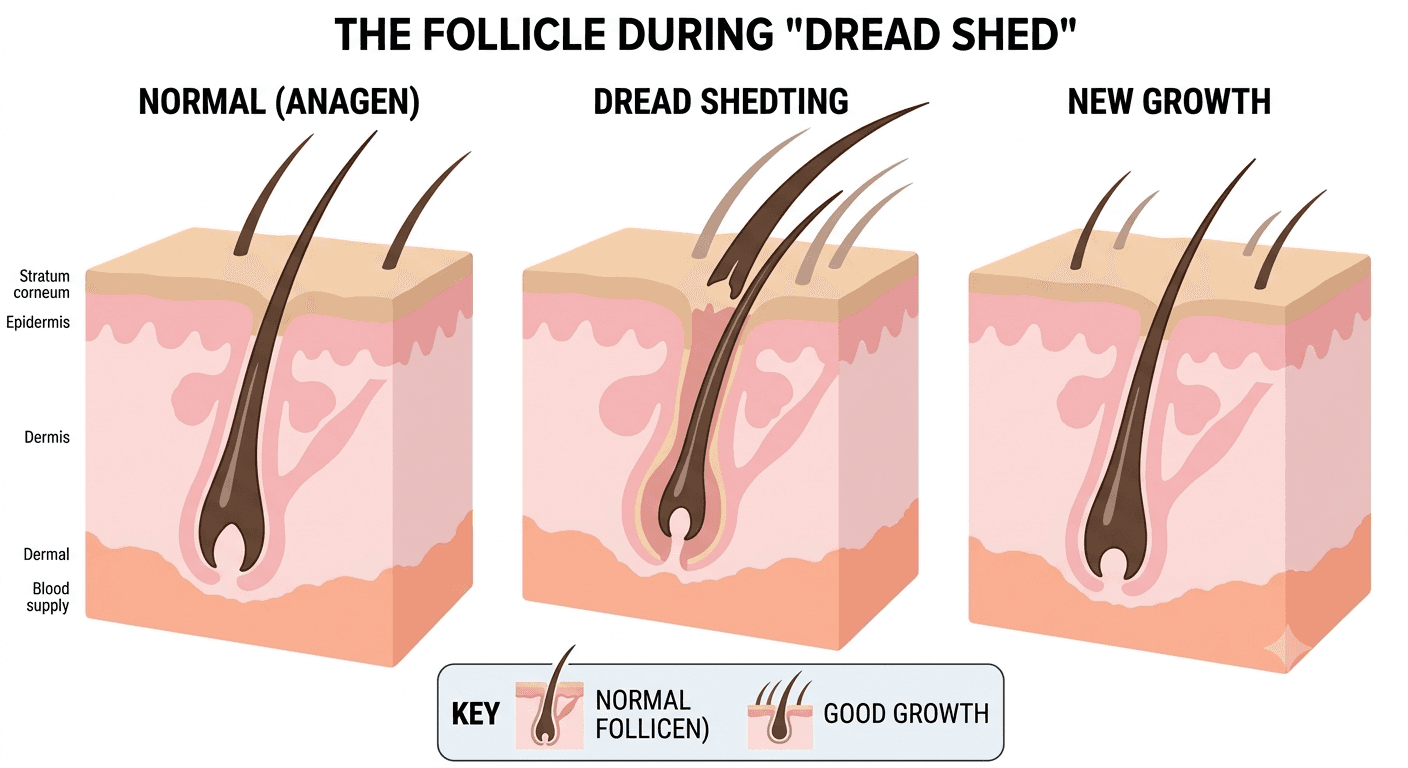
Minoxidil works by pushing resting follicles back into the growth phase early. Here is the catch. Before a follicle can grow a new, stronger hair, it has to let go of the old one sitting in it.
That release is the shed. The hairs you see in the drain were already at the end of their cycle. Minoxidil did not kill them. It evicted them ahead of schedule so something better could move in.
Fiction: More shedding means the treatment is damaging your hair
Fact. The shed is the treatment working, not failing.
A damaged follicle stops producing hair. A stimulated follicle swaps an old hair for a new one. What you see in the shower looks identical, which is exactly why this phase earns the name dread shed. The difference is invisible and happening under the skin, where the follicle is already building its replacement.
Fiction: The hair that sheds is gone for good
Fact. Shed hair from an active follicle grows back.
The follicle is not the hair. The follicle is the factory. During the dread shed, the factory stays open, retools, and starts producing again. The new hair that emerges over the following weeks is typically anchored in a follicle that is now in an extended growth phase, which is the entire point of treatment.
This is different from the gradual miniaturization that brought you here, where follicles shrink and produce finer, shorter hairs over years. The dread shed is a scheduled turnover. Untreated thinning is a slow factory closure.
Fiction: You should stop treatment the moment shedding starts
Fact. Stopping mid-shed is the one move that guarantees you lose ground.
If you quit during the shed, you take the loss without the payoff. The old hairs are already released. The new growth they were making room for never gets its window. Then, when you restart months later, the cycle begins again from zero.
Dr. Kira Mengistu says “This is where I ask patients to trust the process”. Not as a slogan, but as a clinical instruction. The shed has a beginning, a middle, and an end. Treatment interrupted in the middle delivers the worst of both.
Fiction: Everyone who starts minoxidil gets the dread shed
Fact. Many women never notice a shed at all. Up to 40% of patient on minoxidil don’t notice any shedding at all.
Shedding intensity varies with where your follicles are in their cycles when you start. A scalp with more follicles in the resting phase has more old hairs to release. A scalp with fewer has a quieter transition. Neither pattern predicts your final result.
Fiction: If you don’t shed, the treatment isn’t working
Fact. A quiet start is not a failed start.
Some women read the absence of a shed as the absence of an effect and quit for the opposite reason. The shed is a side effect of follicle stimulation, not the measurement of it. The measurement is what your hair looks like at 90 days and beyond. Density at the part line, the width of your ponytail, the fine new growth at your hairline. Those are the numbers that matter.
What to expect across your first 90 days
Hair operates on a slow clock, and 90 days is the honest minimum for visible change.
Weeks 1 to 8. Treatment begins recruiting resting follicles. If a shed happens, it happens here. This is the phase to photograph your part and then stop staring at the drain.
Weeks 8 to 12. Shedding tapers. New growth begins to surface as short, fine hairs, most visible at the hairline and part.
Day 90 and beyond. New hairs gain length and diameter. This is where women start describing thicker, fuller hair, and where progress photos earn their keep.
Results vary from woman to woman, and the timeline above describes the typical arc, not a guarantee. If heavy shedding continues well past the expected window, message your prescriber. Every Hair Cultivated patient has direct access to her prescribing physician for exactly this moment, because occasionally persistent shedding points to something else worth ruling out, like low ferritin or a thyroid shift.
Why the formula you shed with matters
Most women who quit during the dread shed were fighting on two fronts. The shed itself, plus a formula that made daily use miserable. Drugstore minoxidil was built for men. It runs greasy, it flattens a blowout, and its propylene glycol base leaves many scalps itchy and flaking, which reads as more damage at the exact moment confidence is lowest.
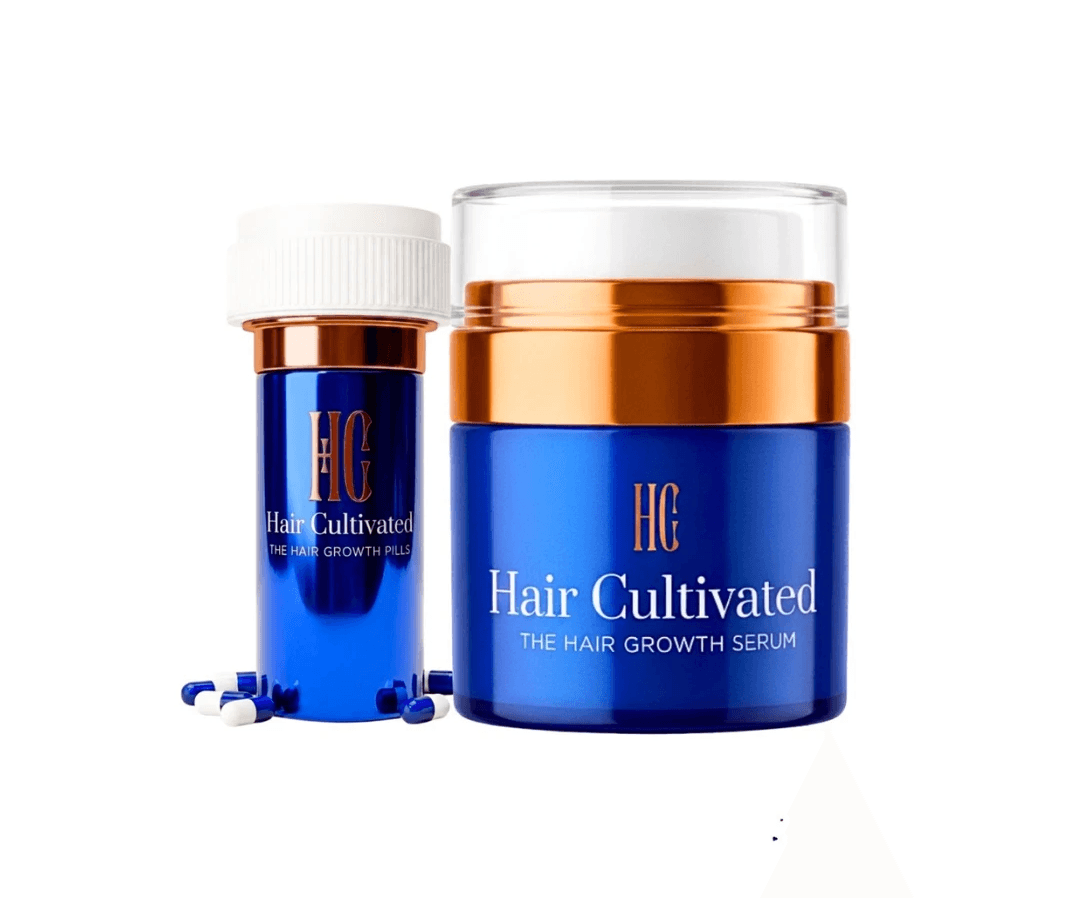
Hair Cultivated formulas take the opposite approach. Our core serum pairs 7.5 percent minoxidil with tretinoin, which helps the minoxidil absorb where it needs to work. No propylene glycol. No drying alcohols. A Dry Touch Finish™ that disappears into styled hair, so staying consistent through the shed costs you nothing cosmetically. Dosed for women, built for the follicle.
For women whose hair loss has a stronger hormonal driver, our Elevated formula adds topical dutasteride, prescribed only when your consultation supports it. Important: dutasteride is not for anyone who is pregnant, breastfeeding, or trying to conceive. Your prescribing physician will review this with you before any formula reaches your door.
Consistency is the entire game during the shed. A formula you enjoy using is not a luxury. It is the mechanism that gets you to day 90.
The bottom line
The dread shed is a scheduled turnover, not a setback. The follicles releasing old hairs are the same follicles building your new ones. The women with the results photos are the ones who kept going through the exact weeks you are in right now, with a Hair Cultivated formula they did not dread applying.
Not ready yet. Take the two-minute hair assessment and we will send you a plan for your specific type of shedding.
QUIZ FIND OUT THE RIGHT FORMULA FOR YOU >>>
You started treatment to keep your hair. Two weeks in, there is more of it in the drain, not less.
This is the dread shed. It is the most common reason women quit minoxidil early, and it is the most misunderstood phase of the entire treatment. As a physician, I spend more time talking patients through this window than any other part of their protocol. So let’s separate what is actually happening on your scalp from what the panic at 2 am tells you.
What the dread shed actually is
Your hair grows in cycles. Each follicle spends years in a growth phase, then rests, then releases its hair to make room for a new one. On a healthy scalp, about 90 percent of your follicles are growing at any given time while the rest are resting or releasing.
Minoxidil works by pushing resting follicles back into the growth phase early. Here is the catch. Before a follicle can grow a new, stronger hair, it has to let go of the old one sitting in it.
That release is the shed. The hairs you see in the drain were already at the end of their cycle. Minoxidil did not kill them. It evicted them ahead of schedule so something better could move in.
Fiction: More shedding means the treatment is damaging your hair
Fact. The shed is the treatment working, not failing.
A damaged follicle stops producing hair. A stimulated follicle swaps an old hair for a new one. What you see in the shower looks identical, which is exactly why this phase earns the name dread shed. The difference is invisible and happening under the skin, where the follicle is already building its replacement.
Fiction: The hair that sheds is gone for good
Fact. Shed hair from an active follicle grows back.
The follicle is not the hair. The follicle is the factory. During the dread shed, the factory stays open, retools, and starts producing again. The new hair that emerges over the following weeks is typically anchored in a follicle that is now in an extended growth phase, which is the entire point of treatment.
This is different from the gradual miniaturization that brought you here, where follicles shrink and produce finer, shorter hairs over years. The dread shed is a scheduled turnover. Untreated thinning is a slow factory closure.
Fiction: You should stop treatment the moment shedding starts
Fact. Stopping mid-shed is the one move that guarantees you lose ground.
If you quit during the shed, you take the loss without the payoff. The old hairs are already released. The new growth they were making room for never gets its window. Then, when you restart months later, the cycle begins again from zero.
Dr. Kira Mengistu says “This is where I ask patients to trust the process”. Not as a slogan, but as a clinical instruction. The shed has a beginning, a middle, and an end. Treatment interrupted in the middle delivers the worst of both.
Fiction: Everyone who starts minoxidil gets the dread shed
Fact. Many women never notice a shed at all. Up to 40% of patient on minoxidil don’t notice any shedding at all.
Shedding intensity varies with where your follicles are in their cycles when you start. A scalp with more follicles in the resting phase has more old hairs to release. A scalp with fewer has a quieter transition. Neither pattern predicts your final result.
Fiction: If you don’t shed, the treatment isn’t working
Fact. A quiet start is not a failed start.
Some women read the absence of a shed as the absence of an effect and quit for the opposite reason. The shed is a side effect of follicle stimulation, not the measurement of it. The measurement is what your hair looks like at 90 days and beyond. Density at the part line, the width of your ponytail, the fine new growth at your hairline. Those are the numbers that matter.
What to expect across your first 90 days
Hair operates on a slow clock, and 90 days is the honest minimum for visible change.
Weeks 1 to 8. Treatment begins recruiting resting follicles. If a shed happens, it happens here. This is the phase to photograph your part and then stop staring at the drain.
Weeks 8 to 12. Shedding tapers. New growth begins to surface as short, fine hairs, most visible at the hairline and part.
Day 90 and beyond. New hairs gain length and diameter. This is where women start describing thicker, fuller hair, and where progress photos earn their keep.
Results vary from woman to woman, and the timeline above describes the typical arc, not a guarantee. If heavy shedding continues well past the expected window, message your prescriber. Every Hair Cultivated patient has direct access to her prescribing physician for exactly this moment, because occasionally persistent shedding points to something else worth ruling out, like low ferritin or a thyroid shift.
Why the formula you shed with matters
Most women who quit during the dread shed were fighting on two fronts. The shed itself, plus a formula that made daily use miserable. Drugstore minoxidil was built for men. It runs greasy, it flattens a blowout, and its propylene glycol base leaves many scalps itchy and flaking, which reads as more damage at the exact moment confidence is lowest.
Hair Cultivated formulas take the opposite approach. Our core serum pairs 7.5 percent minoxidil with tretinoin, which helps the minoxidil absorb where it needs to work. No propylene glycol. No drying alcohols. A Dry Touch Finish™ that disappears into styled hair, so staying consistent through the shed costs you nothing cosmetically. Dosed for women, built for the follicle.
For women whose hair loss has a stronger hormonal driver, our Elevated formula adds topical dutasteride, prescribed only when your consultation supports it. Important: dutasteride is not for anyone who is pregnant, breastfeeding, or trying to conceive. Your prescribing physician will review this with you before any formula reaches your door.
Consistency is the entire game during the shed. A formula you enjoy using is not a luxury. It is the mechanism that gets you to day 90.
The bottom line
The dread shed is a scheduled turnover, not a setback. The follicles releasing old hairs are the same follicles building your new ones. The women with the results photos are the ones who kept going through the exact weeks you are in right now, with a Hair Cultivated formula they did not dread applying.
Not ready yet. Take the two-minute hair assessment and we will send you a plan for your specific type of shedding.
QUIZ FIND OUT THE RIGHT FORMULA FOR YOU >>>
ABOUT THE AUTHOR
Written by Dr. Kira Mengistu, MD — Harvard-trained physician and co-founder and Chief Medical Officer of Hair Cultivated. Dr. Mengistu experienced hair loss herself, and built Hair Cultivated to give women the clinical-grade treatment she couldn’t find.
Written by Dr. Kira Mengistu, MD — Harvard-trained physician and co-founder and Chief Medical Officer of Hair Cultivated. Dr. Mengistu experienced hair loss herself, and built Hair Cultivated to give women the clinical-grade treatment she couldn’t find.

