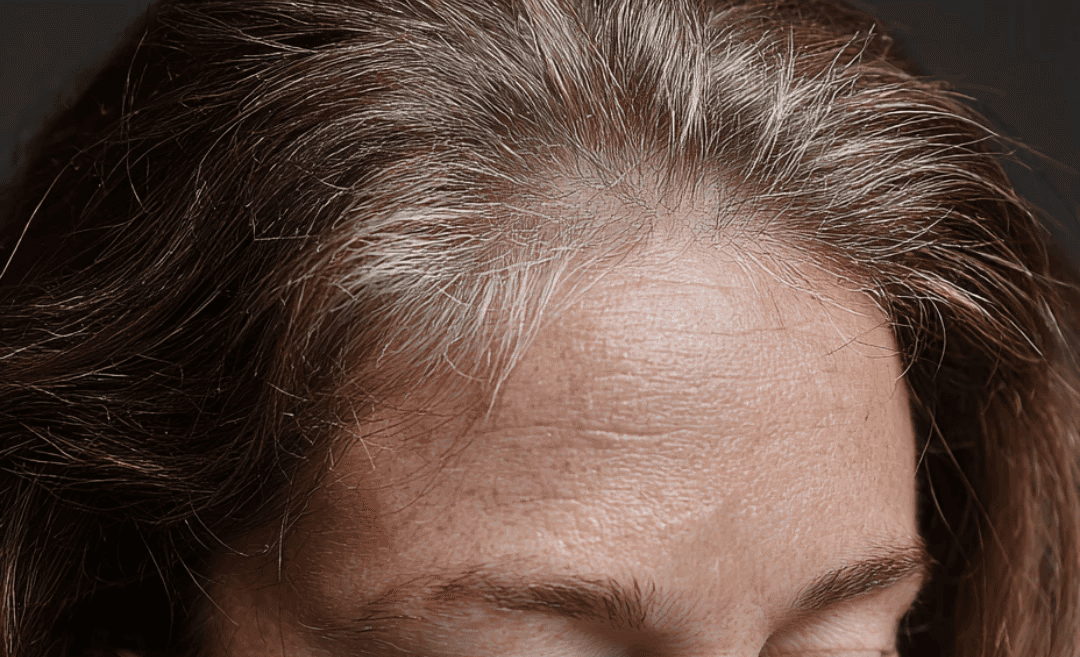
She’s down thirty pounds. Her clothes fit differently, her energy is better, and for the first time in years she feels like herself in photos. Then she notices the hair in the shower drain. A lot of it. She brushes her hair and pulls away a handful. She didn’t sign up for this part.
I hear a version of this story constantly now, and I want to say up front: this is not a reason to stop your GLP-1. It’s a reason to understand what’s happening and treat it directly.
What’s actually causing the shedding
Rapid, significant weight loss is a physical stressor on the body, and hair follicles are sensitive to physical stress. When the body loses weight quickly, a large number of follicles can shift out of the growth phase and into telogen, the resting phase, all at once. Weeks later, that resting hair sheds. This is telogen effluvium, and it’s the same mechanism behind hair loss after surgery, illness, or crash dieting. GLP-1 medications didn’t invent this. They just create the conditions for it at a scale we haven’t seen before, because so many people are losing weight this fast, this consistently.
There’s a second factor. GLP-1 medications reduce appetite, and reduced intake often means reduced intake of the specific nutrients hair needs to grow: protein, iron, zinc, and B vitamins including biotin. Hair is metabolically expensive tissue. When the body is running a calorie deficit, it deprioritizes hair growth in favor of higher-priority functions. That’s not a flaw in you. It’s basic physiology.
Learn how to fix GLP Hair loss!
A 2025 analysis of FDA adverse event data found a meaningfully elevated reporting rate of hair loss associated with semaglutide and tirzepatide compared to other medications, with an even higher signal specifically in women. That data lines up with what we’re seeing clinically: this is real, it’s common, and it’s not something you’re imagining or overreacting to.
“The hair you’re losing today reflects a stress your body absorbed months ago. That delay is confusing, but it also means this isn’t permanent, and it isn’t a reason to stop a medication that’s working for you.”
One of the most disorienting parts of telogen effluvium is the delay. The shedding you see today reflects a stress that happened months ago, because of how the hair growth cycle works. A follicle doesn’t shed the moment it’s stressed. It shifts into a resting phase first, and only releases the hair some time later. That’s why so many women don’t connect the dots right away, and why so many stop their GLP-1 in a panic, thinking that’s the only fix. It usually isn’t. The medication triggered a process that needs to be treated directly, not necessarily reversed by stopping the drug.
Why a generic hair product doesn’t cover this
GLP-1-related hair loss is rarely just one thing. It’s the physical stress response, plus the nutritional gap, plus, for some women, hormonal shifts that come with rapid weight and body composition change. A single-ingredient product addressing only one of those factors is working with one hand tied behind its back. This is exactly the kind of layered, multifactorial hair loss that benefits from a stacked, physician-guided approach rather than whatever serum is trending on social media that week.
How we approach it at Hair Cultivated
Every consult starts with your actual history, including your GLP-1 timeline, your rate of weight loss, and your intake, so your treatment plan reflects your actual situation. Most patients start with our core serum, 7.5% minoxidil paired with tretinoin, which improves penetration so the minoxidil reaches the follicle rather than sitting on the surface. For more diffuse or advanced shedding, we build out a fuller plan, sometimes including our pill alongside the serum, tailored to your consult. The base is free of propylene glycol and drying alcohols, so it fits into your routine instead of fighting your color, your blowout, or your scalp.
None of this promises an overnight fix, because hair grows on its own timeline, not yours. But most patients start seeing real change around 90 days, which lines up with how the hair cycle actually works.
You don’t have to choose between your results and your hair
You did the hard part. You changed your health, and it’s working. Losing hair over it doesn’t have to be the cost of that progress. It’s identifiable, it’s explainable, and it’s treatable, with the right plan built for exactly what’s happening in your body right now.
Learn more about our approach to GLP-1 hair loss and start your consult with Hair Cultivated.
She’s down thirty pounds. Her clothes fit differently, her energy is better, and for the first time in years she feels like herself in photos. Then she notices the hair in the shower drain. A lot of it. She brushes her hair and pulls away a handful. She didn’t sign up for this part.
I hear a version of this story constantly now, and I want to say up front: this is not a reason to stop your GLP-1. It’s a reason to understand what’s happening and treat it directly.
What’s actually causing the shedding
Rapid, significant weight loss is a physical stressor on the body, and hair follicles are sensitive to physical stress. When the body loses weight quickly, a large number of follicles can shift out of the growth phase and into telogen, the resting phase, all at once. Weeks later, that resting hair sheds. This is telogen effluvium, and it’s the same mechanism behind hair loss after surgery, illness, or crash dieting. GLP-1 medications didn’t invent this. They just create the conditions for it at a scale we haven’t seen before, because so many people are losing weight this fast, this consistently.
There’s a second factor. GLP-1 medications reduce appetite, and reduced intake often means reduced intake of the specific nutrients hair needs to grow: protein, iron, zinc, and B vitamins including biotin. Hair is metabolically expensive tissue. When the body is running a calorie deficit, it deprioritizes hair growth in favor of higher-priority functions. That’s not a flaw in you. It’s basic physiology.
Learn how to fix GLP Hair loss!
A 2025 analysis of FDA adverse event data found a meaningfully elevated reporting rate of hair loss associated with semaglutide and tirzepatide compared to other medications, with an even higher signal specifically in women. That data lines up with what we’re seeing clinically: this is real, it’s common, and it’s not something you’re imagining or overreacting to.
“The hair you’re losing today reflects a stress your body absorbed months ago. That delay is confusing, but it also means this isn’t permanent, and it isn’t a reason to stop a medication that’s working for you.”
One of the most disorienting parts of telogen effluvium is the delay. The shedding you see today reflects a stress that happened months ago, because of how the hair growth cycle works. A follicle doesn’t shed the moment it’s stressed. It shifts into a resting phase first, and only releases the hair some time later. That’s why so many women don’t connect the dots right away, and why so many stop their GLP-1 in a panic, thinking that’s the only fix. It usually isn’t. The medication triggered a process that needs to be treated directly, not necessarily reversed by stopping the drug.
Why a generic hair product doesn’t cover this
GLP-1-related hair loss is rarely just one thing. It’s the physical stress response, plus the nutritional gap, plus, for some women, hormonal shifts that come with rapid weight and body composition change. A single-ingredient product addressing only one of those factors is working with one hand tied behind its back. This is exactly the kind of layered, multifactorial hair loss that benefits from a stacked, physician-guided approach rather than whatever serum is trending on social media that week.
How we approach it at Hair Cultivated
Every consult starts with your actual history, including your GLP-1 timeline, your rate of weight loss, and your intake, so your treatment plan reflects your actual situation. Most patients start with our core serum, 7.5% minoxidil paired with tretinoin, which improves penetration so the minoxidil reaches the follicle rather than sitting on the surface. For more diffuse or advanced shedding, we build out a fuller plan, sometimes including our pill alongside the serum, tailored to your consult. The base is free of propylene glycol and drying alcohols, so it fits into your routine instead of fighting your color, your blowout, or your scalp.
None of this promises an overnight fix, because hair grows on its own timeline, not yours. But most patients start seeing real change around 90 days, which lines up with how the hair cycle actually works.
You don’t have to choose between your results and your hair
You did the hard part. You changed your health, and it’s working. Losing hair over it doesn’t have to be the cost of that progress. It’s identifiable, it’s explainable, and it’s treatable, with the right plan built for exactly what’s happening in your body right now.
Learn more about our approach to GLP-1 hair loss and start your consult with Hair Cultivated.
ABOUT THE AUTHOR
Written by Dr. Kira Mengistu, MD — Harvard-trained physician and co-founder and Chief Medical Officer of Hair Cultivated. Dr. Mengistu experienced hair loss herself, and built Hair Cultivated to give women the clinical-grade treatment she couldn’t find.
Written by Dr. Kira Mengistu, MD — Harvard-trained physician and co-founder and Chief Medical Officer of Hair Cultivated. Dr. Mengistu experienced hair loss herself, and built Hair Cultivated to give women the clinical-grade treatment she couldn’t find.