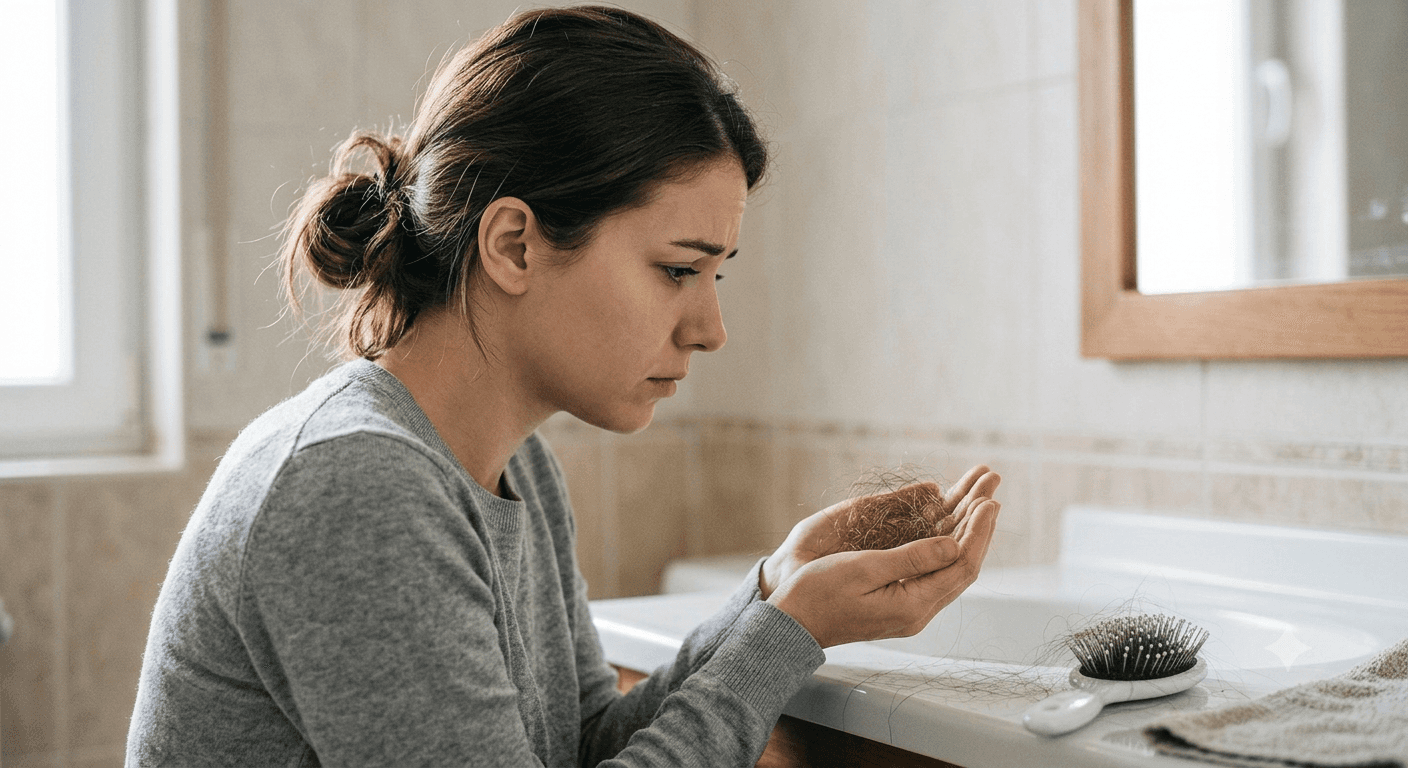
The itch came first.
Then the flakes on your black sweater. Now there is more hair in the brush and more scalp in the mirror, and you are wondering if the two are connected.
They often are. As a physician who treats hair loss, I hear this pairing constantly, and the itch is one of the most useful clues a scalp can give you. It tells you the environment your follicles live in has a problem. Here is how to read it.
How an itchy scalp and hair loss connect
Think of your scalp as the soil your hair grows from. When the soil is inflamed, irritated, or overrun, the follicles rooted in it pay the price.
An itchy scalp rarely causes hair loss by itself. What it does is signal a condition that can. Chronic inflammation around the follicle can nudge hairs out of their growth phase early. The scratching itself adds mechanical stress, breaking hairs at the surface and irritating the skin further. And the conditions behind the itch, left untreated, keep the whole cycle running.
The good news sits inside the bad news. A scalp that itches is a scalp telling you exactly where to intervene.
The most common causes of an itchy, shedding scalp
Seborrheic dermatitis and dandruff. The most frequent culprit. A yeast called Malassezia lives on every human scalp. On some scalps it overgrows, feeding on scalp oils and triggering inflammation, flaking, and that deep, persistent itch. The inflammation it creates is the piece that matters for your hair.
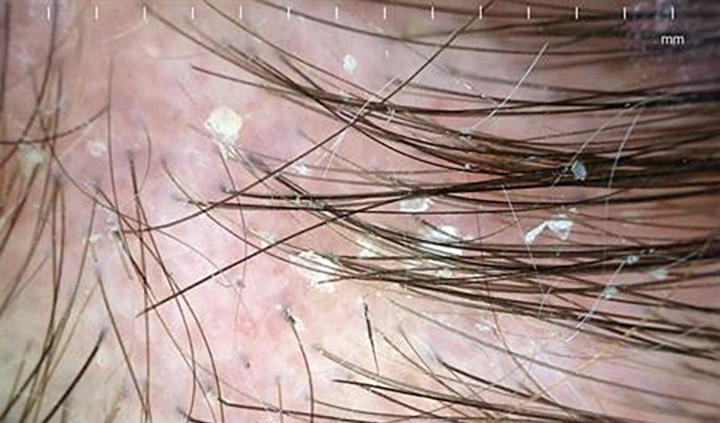
Product buildup. Dry shampoo, styling creams, and heavy conditioners accumulate at the root. Buildup traps oil and yeast against the skin, blocks the follicle opening, and leaves the scalp itchy and dull. If your part line looks waxy and your roots fall flat by noon, this is worth ruling out.
Drying ingredients. Alcohols and propylene glycol, the base of most drugstore hair loss treatments, strip the scalp barrier. A compromised barrier itches, flakes, and reads as damage at the exact moment you are trying to heal. Many women mistake this irritation for an allergy to treatment itself and quit. The problem was the base, not the medicine.
Tension and tight styles. Slicked-back buns, tight ponytails, and heavy extensions pull at the follicle. The early warning is tenderness and itch along the hairline. The later stage is traction alopecia, where the pulled follicles stop producing.
Stress and hormonal shifts. Stress shedding and the hormonal transitions of perimenopause change oil production and skin sensitivity, so itch and shedding often arrive as a package during the exact seasons of life when hair feels most fragile.
The scalp microbiome, in plain English
You will see “microbiome” on a lot of hair products right now, so here is what the science actually supports.
Your scalp hosts a community of bacteria and yeast, and a balanced community is part of healthy skin. When the balance tips, most often toward Malassezia overgrowth, the result is the flaking and inflammation described above. That much is well established.
What is not established is that any serum, supplement, or rinse “optimizes” your microbiome in a way that regrows hair. Treat that claim as marketing. What medicine can do is address the overgrowth and the inflammation directly, which is a narrower promise and a real one.
What not to do
Resist the aggressive fixes. Harsh scrubs and daily clarifying strip the barrier and make the itch worse. Scratching gives thirty seconds of relief and hours of added irritation. And do not stop washing your hair to save it. An unwashed scalp gives yeast and buildup exactly the environment they want.
The other mistake is treating the hair loss while ignoring the scalp. Growth treatment applied to an inflamed, flaking scalp is planting seeds in bad soil.
What treatment for itchy scalp looks like
This is why we built Hair Cultivated around scalp health, not regrowth alone. The scalp ages 6x faster than the skin on your face, and it gets a fraction of the care. Treating it like skin is the foundation everything else stands on.
A physician-directed protocol for an itchy, shedding scalp works on both fronts at once.
Calm the scalp. Our formulas can include ketoconazole, a prescription anti-fungal that targets Malassezia overgrowth directly, addressing the itch and flaking at their source rather than masking them.
Renew the surface. Tretinoin, the same anti-aging active dermatologists prescribe for your face, supports skin cell turnover on the scalp and helps minoxidil absorb where it needs to work.
Skip the irritants. No propylene glycol. No drying alcohols. The base is a skincare-grade formula with a Dry Touch Finish™ that rubs in clean, so treating your scalp does not undo your blowout or add to the buildup you are trying to clear.
Treat the loss. 7.5 percent minoxidil, among the highest concentrations available, recruits follicles back into their growth phase while the scalp work above gives them a healthy place to grow.
Every formula starts with a consultation reviewed by a licensed physician, because an itchy, shedding scalp deserves a diagnosis, not a guess. If your itch points to something beyond the scalp, like low ferritin or a thyroid shift, that conversation is where it gets caught.
When to take the itch seriously
See a physician promptly if the itch comes with pain, sores, pus, or patches of loss with a smooth, bare center. Those signs point to conditions that need in-person care.
For the far more common picture, the low-grade itch, the flakes, the widening part, the thinning ponytail, the move is simpler. Treat the scalp and the hair together, give the protocol a full 90 days, and trust the process. Results vary from woman to woman, but thicker, fuller hair in 90 days is the timeline we build treatment around, and a calmer scalp usually announces itself much sooner.
Not sure what your scalp is telling you. Take the two-minute Hair Age Score assessment and find out how fast your scalp is aging, and what to do about it.
The itch came first.
Then the flakes on your black sweater. Now there is more hair in the brush and more scalp in the mirror, and you are wondering if the two are connected.
They often are. As a physician who treats hair loss, I hear this pairing constantly, and the itch is one of the most useful clues a scalp can give you. It tells you the environment your follicles live in has a problem. Here is how to read it.
How an itchy scalp and hair loss connect
Think of your scalp as the soil your hair grows from. When the soil is inflamed, irritated, or overrun, the follicles rooted in it pay the price.
An itchy scalp rarely causes hair loss by itself. What it does is signal a condition that can. Chronic inflammation around the follicle can nudge hairs out of their growth phase early. The scratching itself adds mechanical stress, breaking hairs at the surface and irritating the skin further. And the conditions behind the itch, left untreated, keep the whole cycle running.
The good news sits inside the bad news. A scalp that itches is a scalp telling you exactly where to intervene.
The most common causes of an itchy, shedding scalp
Seborrheic dermatitis and dandruff. The most frequent culprit. A yeast called Malassezia lives on every human scalp. On some scalps it overgrows, feeding on scalp oils and triggering inflammation, flaking, and that deep, persistent itch. The inflammation it creates is the piece that matters for your hair.
Product buildup. Dry shampoo, styling creams, and heavy conditioners accumulate at the root. Buildup traps oil and yeast against the skin, blocks the follicle opening, and leaves the scalp itchy and dull. If your part line looks waxy and your roots fall flat by noon, this is worth ruling out.
Drying ingredients. Alcohols and propylene glycol, the base of most drugstore hair loss treatments, strip the scalp barrier. A compromised barrier itches, flakes, and reads as damage at the exact moment you are trying to heal. Many women mistake this irritation for an allergy to treatment itself and quit. The problem was the base, not the medicine.
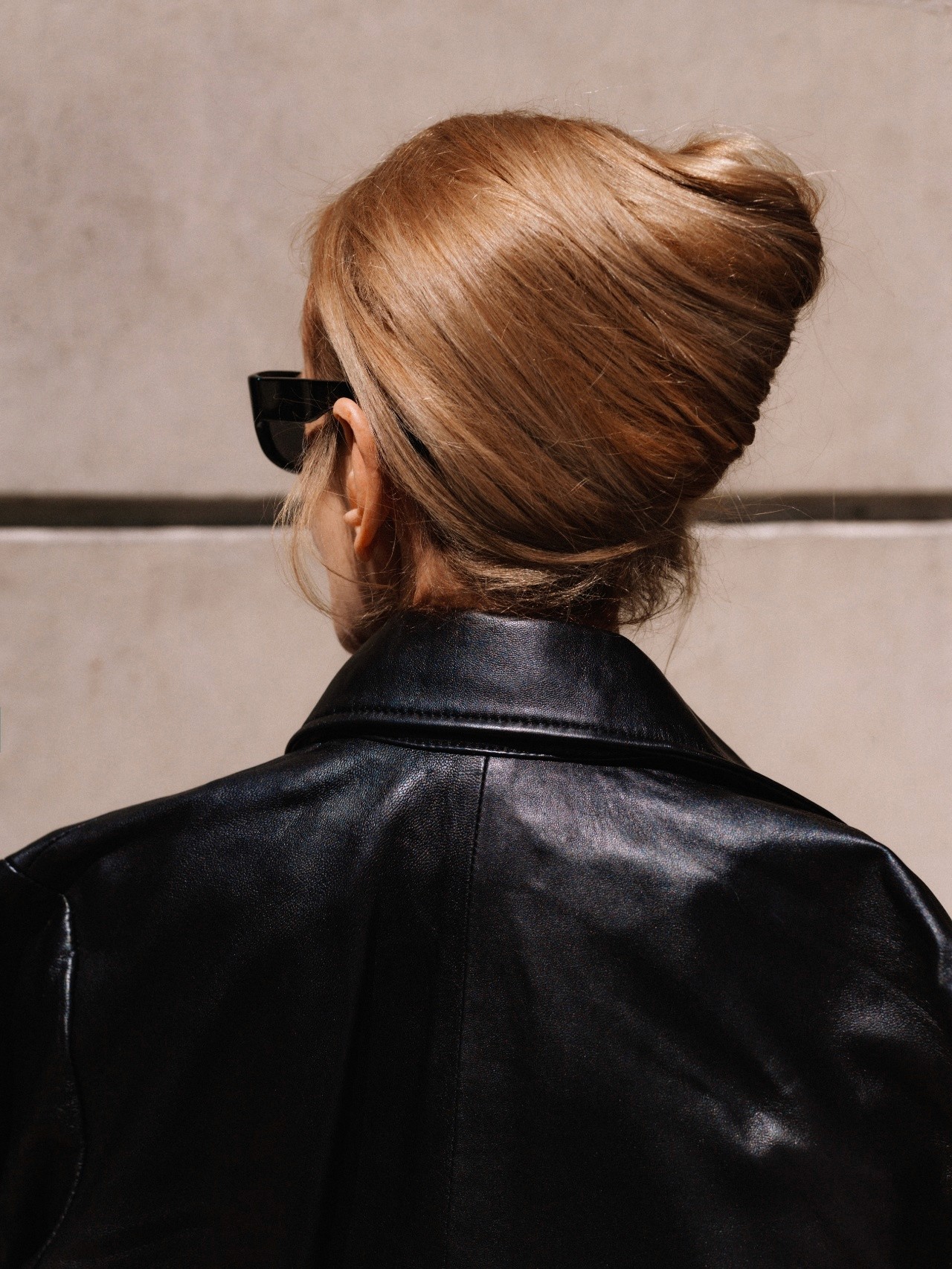
Tension and tight styles. Slicked-back buns, tight ponytails, and heavy extensions pull at the follicle. The early warning is tenderness and itch along the hairline. The later stage is traction alopecia, where the pulled follicles stop producing.
Stress and hormonal shifts. Stress shedding and the hormonal transitions of perimenopause change oil production and skin sensitivity, so itch and shedding often arrive as a package during the exact seasons of life when hair feels most fragile.
The scalp microbiome, in plain English
You will see “microbiome” on a lot of hair products right now, so here is what the science actually supports.
Your scalp hosts a community of bacteria and yeast, and a balanced community is part of healthy skin. When the balance tips, most often toward Malassezia overgrowth, the result is the flaking and inflammation described above. That much is well established.
What is not established is that any serum, supplement, or rinse “optimizes” your microbiome in a way that regrows hair. Treat that claim as marketing. What medicine can do is address the overgrowth and the inflammation directly, which is a narrower promise and a real one.
What not to do
Resist the aggressive fixes. Harsh scrubs and daily clarifying strip the barrier and make the itch worse. Scratching gives thirty seconds of relief and hours of added irritation. And do not stop washing your hair to save it. An unwashed scalp gives yeast and buildup exactly the environment they want.
The other mistake is treating the hair loss while ignoring the scalp. Growth treatment applied to an inflamed, flaking scalp is planting seeds in bad soil.
What treatment for itchy scalp looks like
This is why we built Hair Cultivated around scalp health, not regrowth alone. The scalp ages 6x faster than the skin on your face, and it gets a fraction of the care. Treating it like skin is the foundation everything else stands on.
A physician-directed protocol for an itchy, shedding scalp works on both fronts at once.
Calm the scalp. Our formulas can include ketoconazole, a prescription anti-fungal that targets Malassezia overgrowth directly, addressing the itch and flaking at their source rather than masking them.
Renew the surface. Tretinoin, the same anti-aging active dermatologists prescribe for your face, supports skin cell turnover on the scalp and helps minoxidil absorb where it needs to work.
Skip the irritants. No propylene glycol. No drying alcohols. The base is a skincare-grade formula with a Dry Touch Finish™ that rubs in clean, so treating your scalp does not undo your blowout or add to the buildup you are trying to clear.
Treat the loss. 7.5 percent minoxidil, among the highest concentrations available, recruits follicles back into their growth phase while the scalp work above gives them a healthy place to grow.
Every formula starts with a consultation reviewed by a licensed physician, because an itchy, shedding scalp deserves a diagnosis, not a guess. If your itch points to something beyond the scalp, like low ferritin or a thyroid shift, that conversation is where it gets caught.
When to take the itch seriously
See a physician promptly if the itch comes with pain, sores, pus, or patches of loss with a smooth, bare center. Those signs point to conditions that need in-person care.
For the far more common picture, the low-grade itch, the flakes, the widening part, the thinning ponytail, the move is simpler. Treat the scalp and the hair together, give the protocol a full 90 days, and trust the process. Results vary from woman to woman, but thicker, fuller hair in 90 days is the timeline we build treatment around, and a calmer scalp usually announces itself much sooner.
Not sure what your scalp is telling you. Take the two-minute Hair Age Score assessment and find out how fast your scalp is aging, and what to do about it.
ABOUT THE AUTHOR
Written by Dr. Kira Mengistu, MD — Harvard-trained physician and co-founder and Chief Medical Officer of Hair Cultivated. Dr. Mengistu experienced hair loss herself, and built Hair Cultivated to give women the clinical-grade treatment she couldn’t find.
Written by Dr. Kira Mengistu, MD — Harvard-trained physician and co-founder and Chief Medical Officer of Hair Cultivated. Dr. Mengistu experienced hair loss herself, and built Hair Cultivated to give women the clinical-grade treatment she couldn’t find.